
Martin County Arrest Records and Charges
Arrest records in Martin County are not the same thing as the court charges later shown in a criminal case. The arrest or booking side can include the agency involved, custody status, jail intake, bond information, and release status when a person is held at the Bertie-Martin Regional Jail. The court charge record is narrower and more formal. It is the accusation, count, statute, class, case number, and charge status maintained in the court file by the Martin County Clerk of Superior Court and related court systems.
That split matters when reading court charges after arrest. A jail or sheriff record may show that a person was booked, but it may not show the final charge wording, later amendment, dismissal, plea, or judgment. The court file can show the charge as filed and later case events, but it is not a full booking database. Custody and resident lookup details belong on the Martin County inmate records page. The full criminal case file, including pleas, dispositions, sentencing, and appeal entries, belongs on the criminal court records page.
The North Carolina General Statutes explain why both tracks exist. G.S. 15A-301 addresses criminal process records, service, recall, and clerk maintenance. G.S. 15A-511 covers the initial appearance before a magistrate after arrest. Those sources support a practical rule: use law enforcement and jail channels for custody facts, and use court channels for filed charges and case status.
The state criminal process maintenance statute is shown in the captured source for criminal process record maintenance.
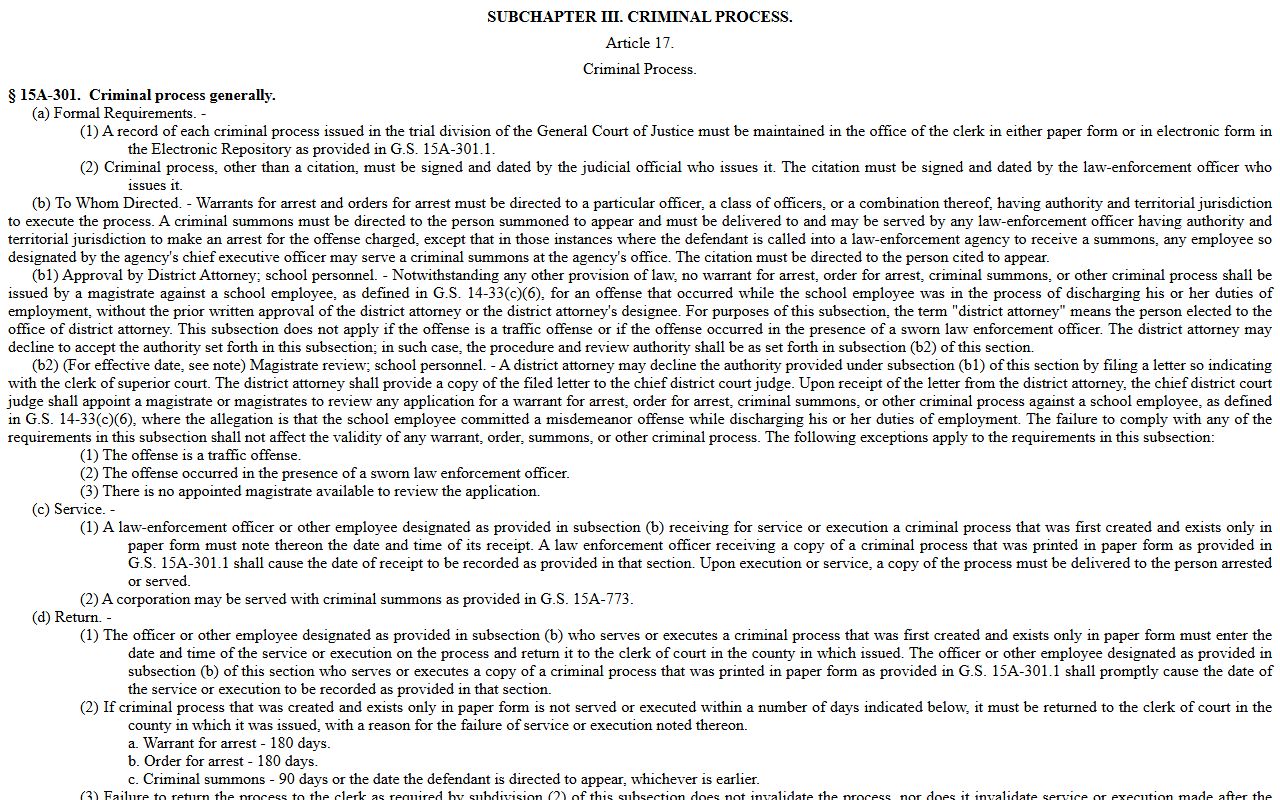
That source connects Martin County charge records to clerk-maintained criminal process, not to a separate public mugshot site.
How to Search Martin County Charges
For court charges, begin with the statewide North Carolina eCourts Portal. Martin County went live in the eCourts group announced by the Judicial Branch in February 2024, so Portal is the main public online channel for case summaries, hearings, payments, and related court activity. Search by defendant name or case number when possible. If the online record is incomplete, use the Clerk of Superior Court at the Martin County Governmental Center because paper files and certified copies remain clerk-office functions.
- Open Portal and use Smart Search for the defendant name, exact case number, or citation number if one is known.
- Set the location to Martin County when the Portal filter is available, then review the case type and case status.
- Open the case summary and read the charge list, offense description, filing date, parties, hearings, and docket events.
- Compare each charge to the disposition field before treating a charge as an outcome.
- Call or visit the Clerk of Superior Court if a certified copy, older paper file, or complete criminal case record is needed.
Background-check users should not rely on a casual web search alone. The Judicial Branch directs people seeking criminal case information to clerk-office resources, including public self-service terminals, and the research file notes that Portal is a near real-time case summary rather than a guaranteed full paper file. Sheriff records, police reports, and criminal investigation material may be restricted under G.S. 132-1.4.
The initial appearance statute explains the first court-adjacent step after arrest.
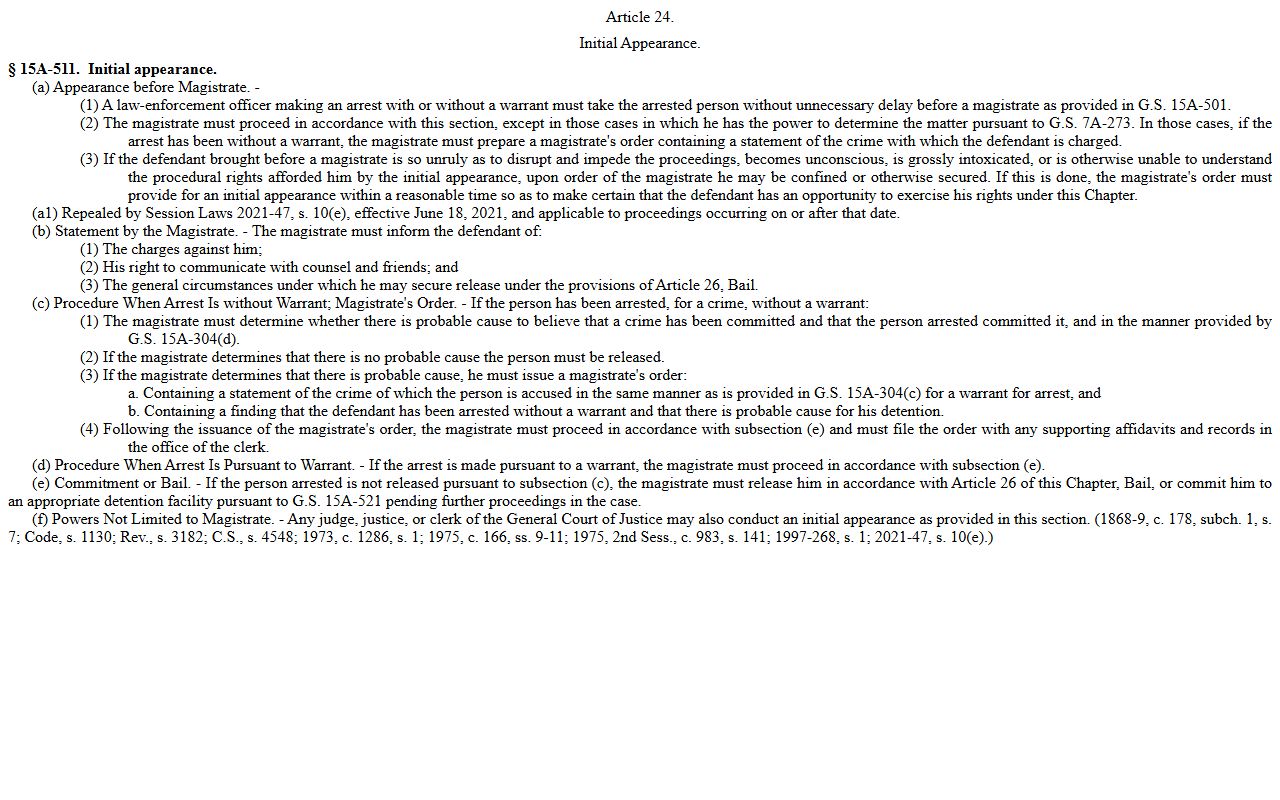
That first appearance can affect release terms and next court dates, while the charge itself remains part of the court case record.
Martin County Charging Documents
One arrest can lead to one charge, several charges, no filed charge, or charges that later change. North Carolina court records may begin with a warrant, magistrate's order, citation, indictment, information, or other charging paper, depending on the offense and case path. In Martin County, prosecutions are handled through Prosecutorial District 2, and the District Attorney, not the sheriff, is the prosecuting office for filed criminal charges, plea negotiations, and many later charge decisions.
| Document | Who Uses It | What It Does | Martin County Use Point |
|---|---|---|---|
| Complaint | Officer, complainant, or charging authority | States facts supporting a criminal accusation or process. | May sit near a warrant, citation, or magistrate-stage record. |
| Information | District Attorney | Frames the formal charge used in court proceedings. | Handled through Prosecutorial District 2 for Martin County cases. |
| Indictment | Grand jury process | Returns formal felony charges for Superior Court prosecution. | Relevant when a felony moves into Superior Court. |
The first appearance before a District Court judge is a separate stage from booking. It can address counsel, probable cause issues, bond, and future court handling. The captured source for first appearance before a District Court judge shows the statutory setting for that stage.
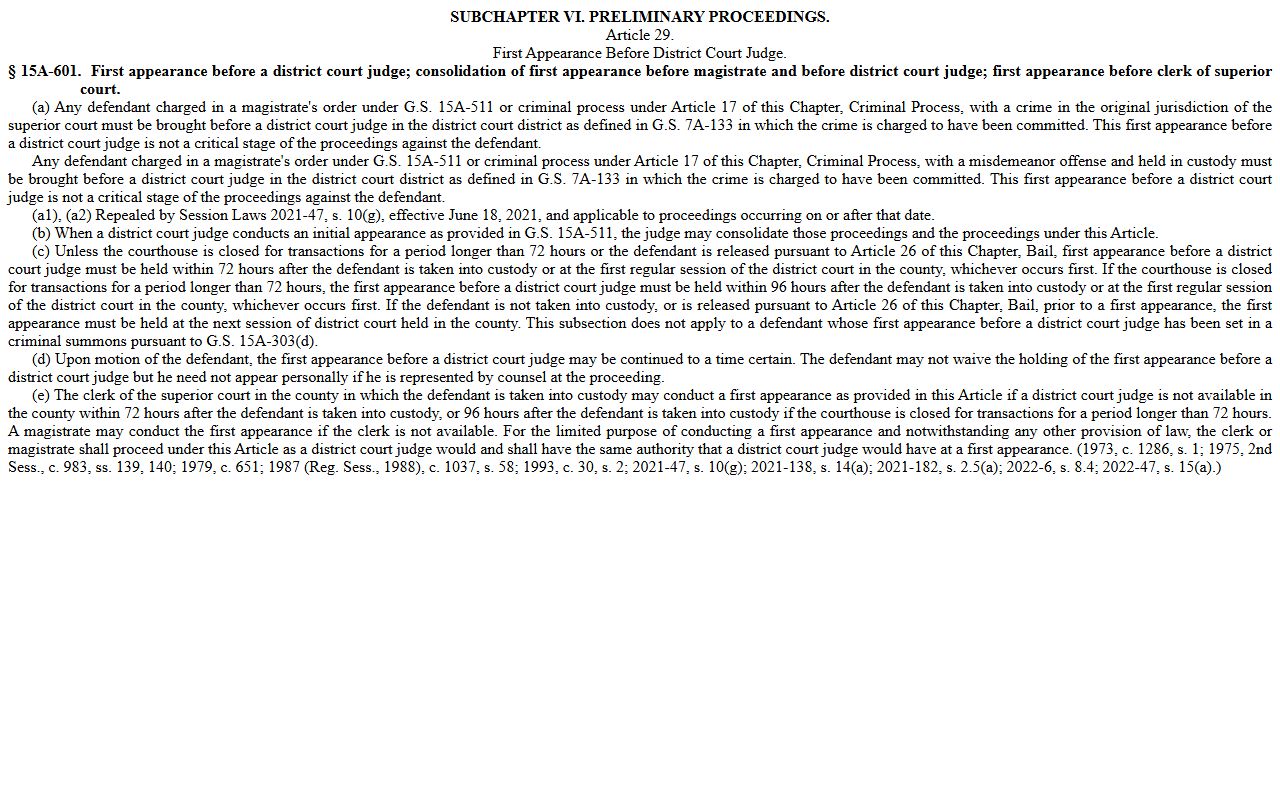
That step helps explain why a booking event can quickly become a court charge record with dates, release terms, and counsel entries.
Martin County Charge Status
Charge status should be read with care. A pending charge means the accusation is open. A dismissed charge is not a conviction. An amended or reduced charge may show that the offense wording or level changed during prosecution. A disposition is the outcome field, and it is the part of the court record that explains whether the charge ended in a plea, verdict, dismissal, deferred outcome, or other court action.
| Status | Meaning | What to Check Next |
|---|---|---|
| Pending | The court charge is still open and no final outcome appears. | Review next hearing date and bond or release conditions. |
| Amended or reduced | The charge wording, statute, or severity changed after filing. | Compare original charge, current charge, and disposition. |
| Dismissed | The charge was ended without a conviction on that count. | Look for whether other counts remain open. |
| Nolle prosequi | The prosecutor declined to continue that charge in court. | Confirm whether the case has other active charges. |
| Convicted | A guilty plea or finding of guilt was entered. | Read the judgment, sentence, costs, probation, or appeal entries. |
Pretrial release terms are also part of the post-arrest record path. The source capture for pretrial release conditions is useful when a charge record references bond or release language.
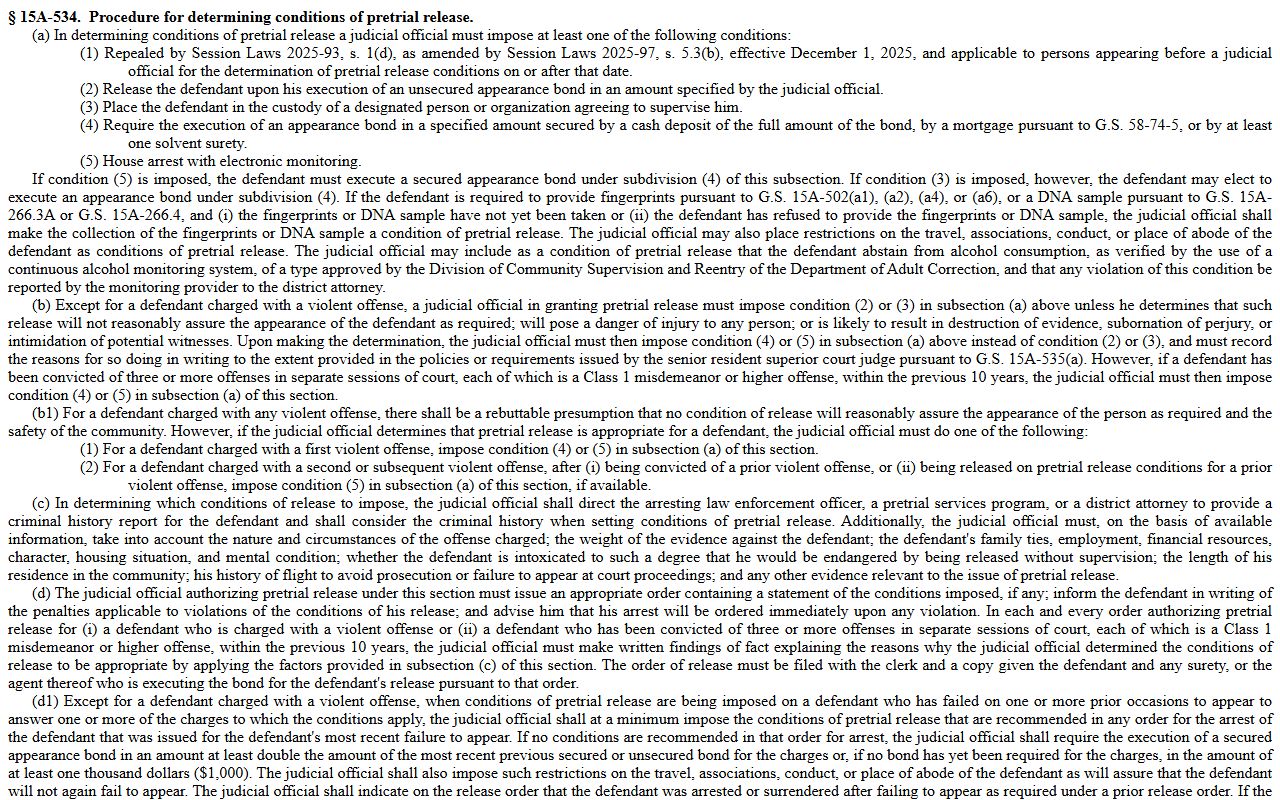
Release conditions do not prove guilt; they show how the court handled custody and appearance risk while charges were pending.
Martin County Charge vs Conviction
Martin County arrest records and charge records can be misunderstood when a charge is treated as a conviction. A charge is the formal accusation. A conviction is the result after a guilty plea, verdict, or other finding that creates a judgment. Court records may show both, but the fields have different legal meanings and should not be merged.
| Point | Charge | Conviction |
|---|---|---|
| Record stage | Filed near the beginning of the criminal case. | Entered after plea, verdict, or other qualifying outcome. |
| Proof level | Based on accusation and probable cause or charging authority. | Based on a guilty plea or finding under criminal proof standards. |
| Public reading | May remain visible even if later dismissed, unless restricted or expunged. | Usually appears with judgment, sentence, costs, or probation terms. |
| Best source | Charge list and docket events in Portal or the clerk file. | Disposition, judgment, sentence, and clerk-certified records. |
District 2's Holistic Hope Mental Health Diversion Program can also affect charge flow for eligible nonviolent offenders with a diagnosed mental illness connected to the offense. The Judicial Branch diversion announcement says district attorney review and victim consultation are part of that program.
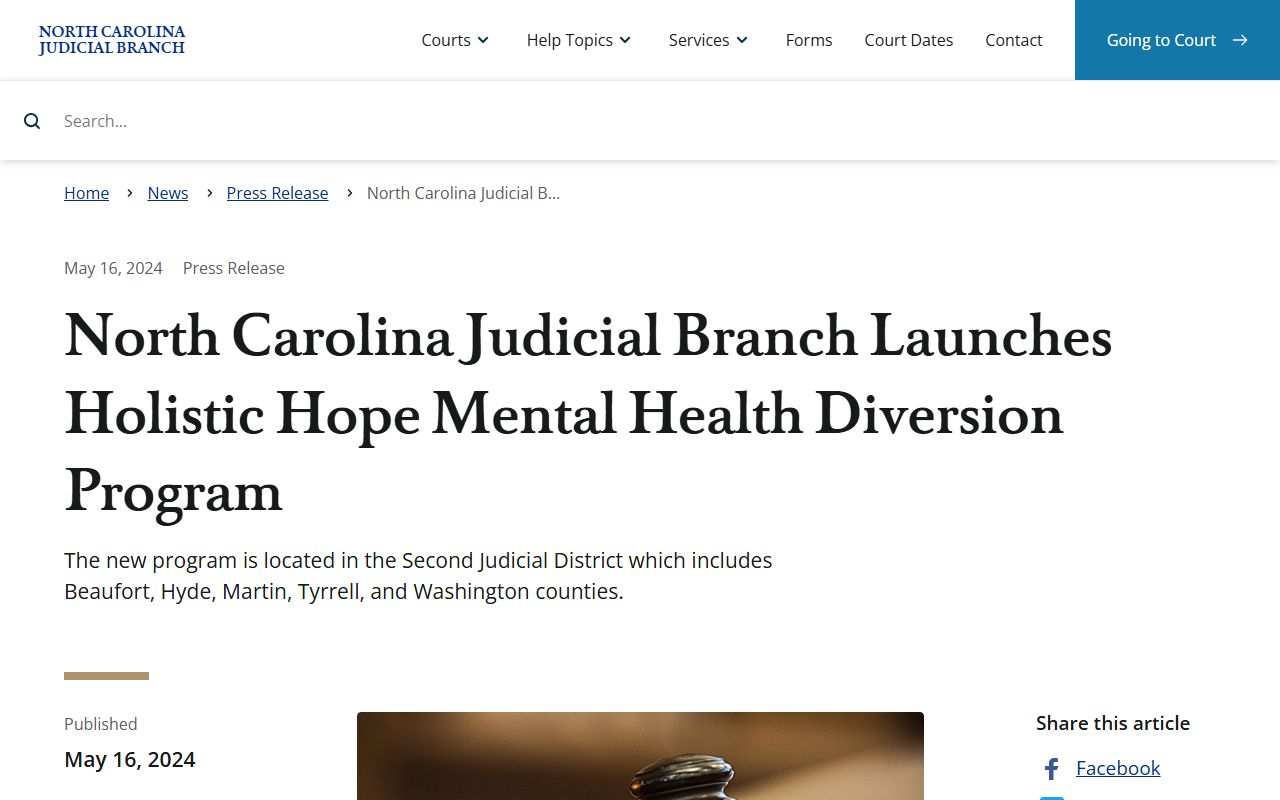
Diversion is one reason a charge record may not move in a simple arrest, plea, sentencing pattern.
Restricted Martin County Arrest Records
Public access in Martin County comes from both court-record law and public-record law. G.S. 132-1 defines public records broadly. G.S. 7A-109 requires clerks to maintain court records, files, dockets, and indexes for inspection except where law prohibits access. Those rules do not open every arrest-related file. Criminal investigation records, juvenile matters, sealed records, expunged records, protected identifiers, and some mental health or family information can be withheld or redacted.
Expunction is especially important for arrest records and charge records. North Carolina describes expunction as removing, sealing, or destroying qualifying arrest, charge, or conviction records. A person seeking expunction for a Martin County case files through the Clerk of Superior Court in the county where the charge or conviction occurred. The process can take months and eligibility depends on the statute, case outcome, waiting periods, pending charges, and other limits.
Federal cases are separate. The research file includes a U.S. Attorney's Office Eastern District of North Carolina case involving Martin County locations, shown in the source capture for a federal robbery and firearm conviction.
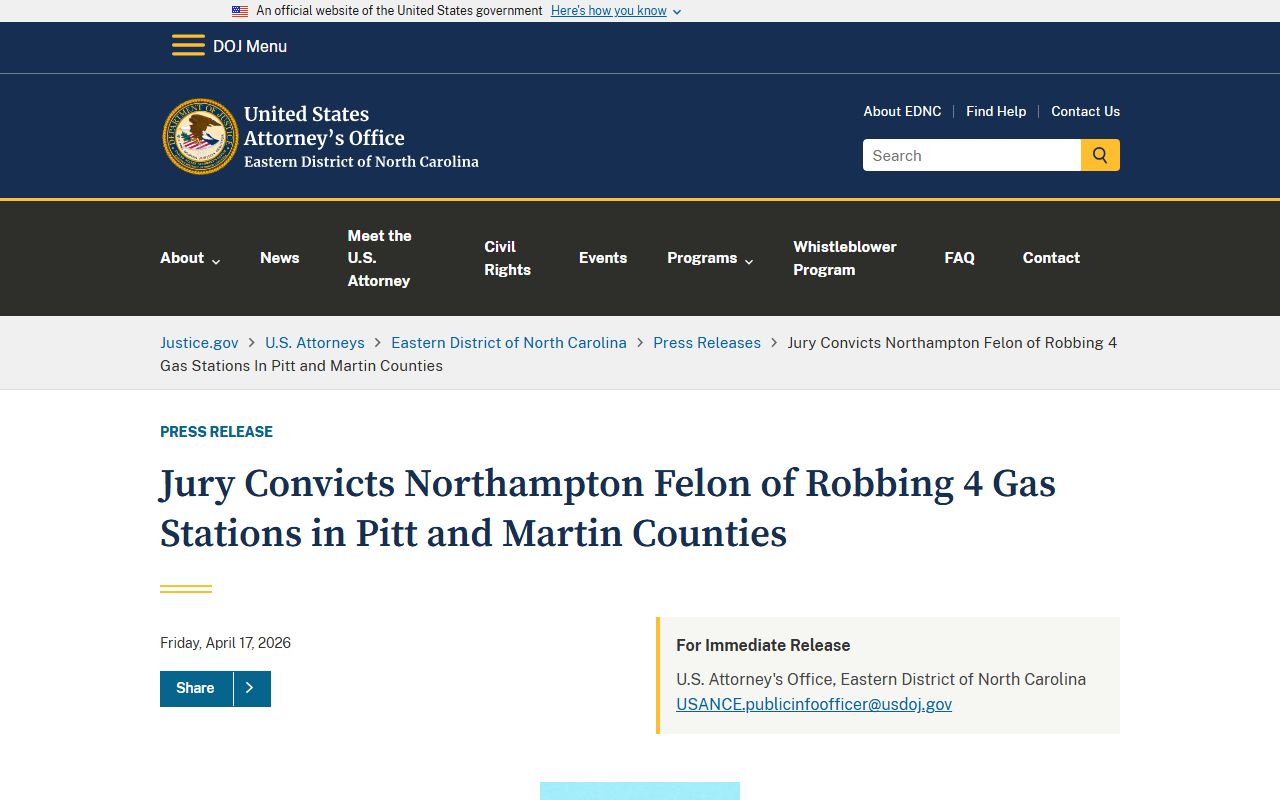
That example is not a county court charge record; it shows why federal criminal cases must be searched through federal sources such as PACER or the Eastern District of North Carolina.